
From Classroom to Career
Three linemen share what Ozarks Electric’s High Voltage Lineman Scholarship set in motion
By Amy Merck, Editor
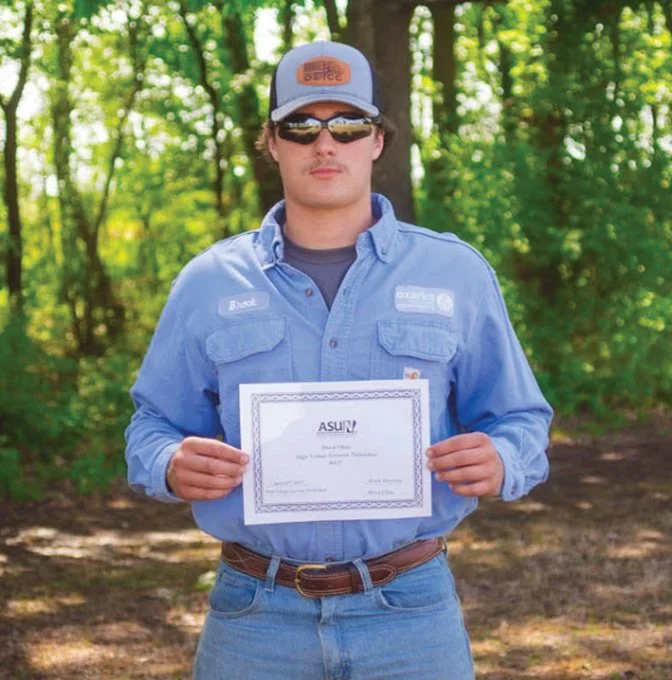
For many linemen at Ozarks Electric, the road into the trade begins the same way: figuring out what comes next after high school. For Brock Oktay, Foster Layman and Wyatt Simco, the answer was line work — a career built outdoors, on skill, teamwork and responsibility.
All three earned Ozarks Electric’s High Voltage Lineman scholarship and attended the High Voltage Lineman Technology program at Arkansas State University-Newport.
School as the foundation
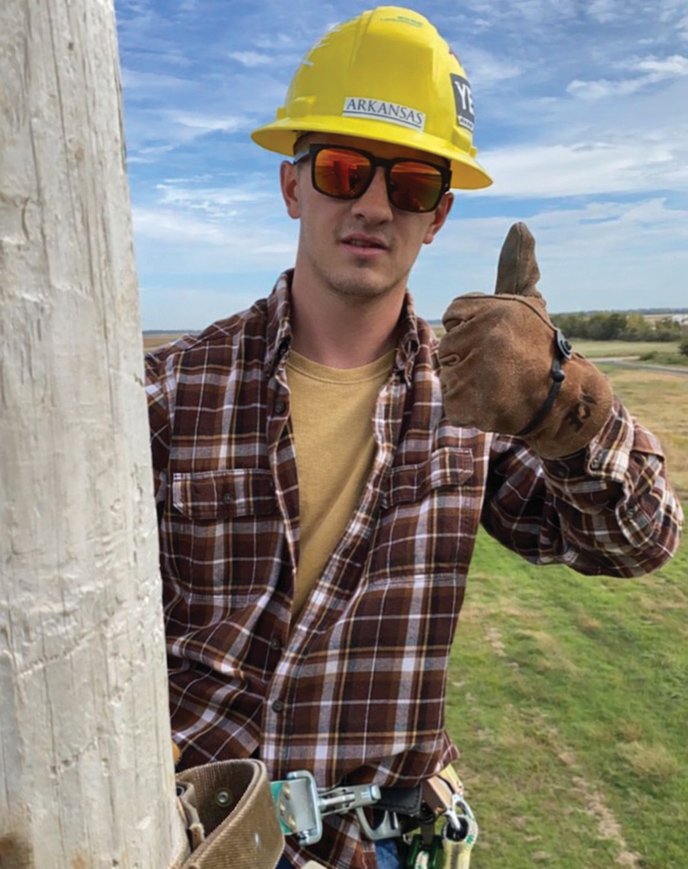
The Newport program introduces students to safety, climbing, tool use and working as part of a crew.
“Climbing is a big one,” said Layman, level-three lineman apprentice. “That alone makes a huge difference when you start working. You come in more comfortable and ready to learn.”
Students also earn a Class A CDL. “That's a huge part of it,” said Oktay, a level-one apprentice. “You can't drive our trucks without a CDL.”
The apprenticeship: where the job becomes real
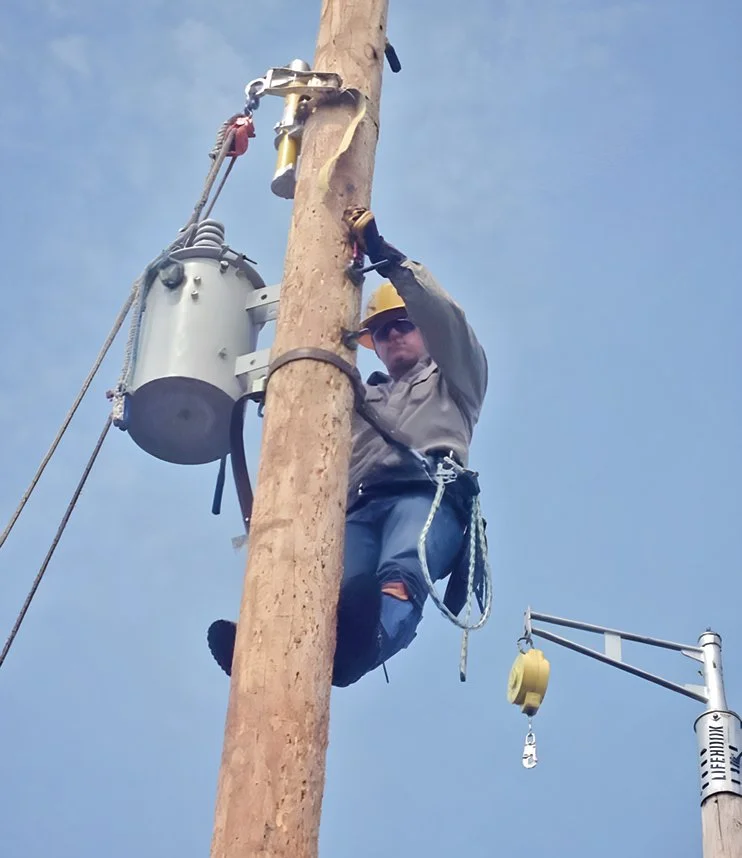
From top: Ozarks linemen Brock Oktay, Foster Layman and Wyatt Simco pictured during their time at the High Voltage Lineman program. (Photos provided.)
New linemen at Ozarks Electric become part of a four-year structured apprenticeship program. They participate from day one, digging and tamping holes, framing and setting poles, assisting with underground work, prepping tools and supporting linemen in the bucket.
Progress isn’t just about tasks. It’s about judgment and sequencing — thinking through a job, recognizing
hazards and anticipating what the bucket truck operators need before they need it.
“You learn how to think through a job before you ever leave the ground,” said Layman, a third-generation lineman. “To slow down, communicate and make it safe.”
Why Ozarks invests
Ozarks Electric views the scholarship as workforce development, not just short-term recruitment.
“Line work is a skill set you can’t just go out and hire overnight,” said Larry Kelly, Ozarks’ manager of field operations. “It takes time, training and a culture that passes knowledge down. Supporting the scholarship helps us build that pipeline locally.”
A trade with longevity
Utilities across the country face an increasing demand for trained lineman because of growing communities, stronger storm events and retirements of veteran linemen.
“It’s a career with staying power,” Kelly said. “We’re going to need linemen for a long time.” Once they complete the apprenticeship, linemen continue to learn — through storm deployments, leadership opportunities and by teaching new apprentices.
“You’re always learning,” said Simco, senior lineman. “Every day is different. You might be working an hour away or five miles down the road, and it’s never the same job twice. That’s what keeps it interesting.”
How to Apply
High Voltage Lineman Scholarship
Ozarks Electric Cooperative
What it covers:
Tuition and training for the High Voltage Lineman Technology program at Arkansas State University–Newport
Application deadline: April 1
Eligibility basics:
Graduating seniors and recent graduates, up to two years post-graduation, from high schools in the Ozarks Electric service territory
Must be accepted into the HVLT program
Driver’s license and clean driving record (for CDL eligibility)
Program start:
Fall semester
Program length:
10 months
Is This Career Right for You?
Line work is a skilled trade rooted in teamwork, communication and physical problem-solving. Students who succeed in the program tend to:
✓ Like working outdoors
✓ Learn by doing
✓ Enjoy physical work
✓ Think through problems step-by-step
✓ Work well as part of a crew
✓ Stay calm in high-pressure situations
✓ Want a career — not just a job
Requirements you’ll build in the program:
Learn to climb proficiently
Earn a Class A CDL
Operate utility equipment
Read and interpret system plans
Work safely around high voltage
Support linemen in the field