Learning Curves
Student mountain biking builds skills beyond the trail
By Amy Merck, Editor
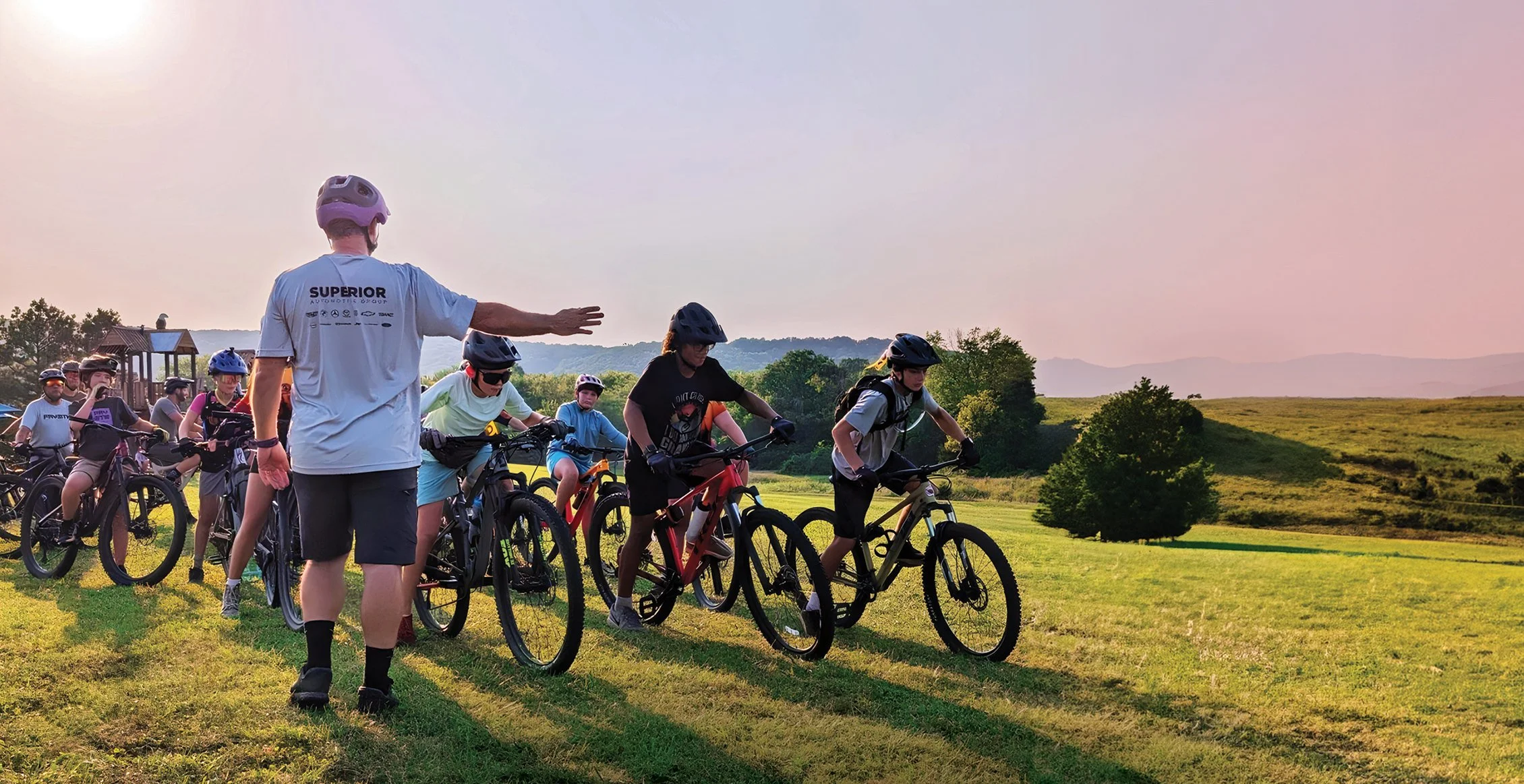
FayMTB coach Adam Rogers leads a practice at Mount Kessler. (Photo by Ben Spiking.)
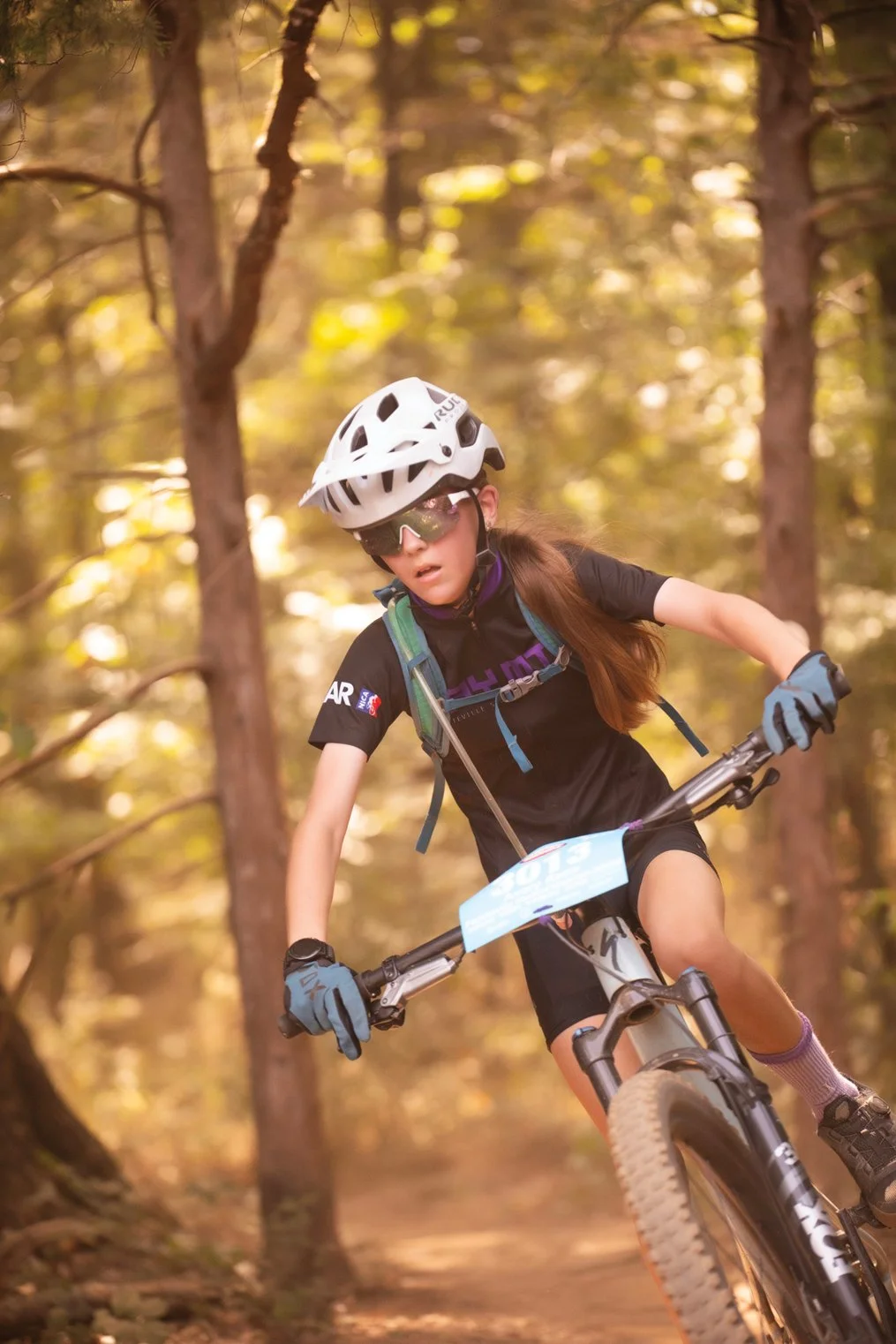
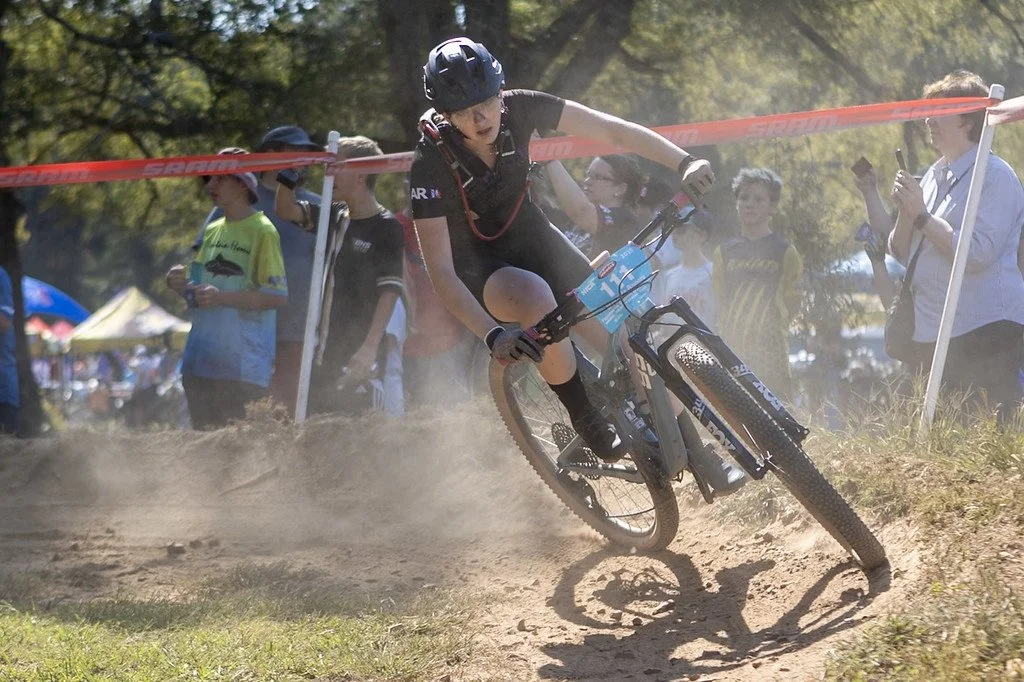
Avery Reno competes in a NICA race in Conway. (Photo by Jodi Holifield.)
Mountain biking can be full of surprises. Kids who thought they weren’t athletic find out they can ride. Parents go from chauffeurs to coaches. And families are often surprised by who shines, who keeps going and who finds belonging.
Mountain biking has become a part of Northwest Arkansas’s outdoor culture. The region hosts international events at Centennial Mountain in Fayetteville, and Bentonville markets itself as the Mountain Biking Capital of the World. From the outside, the sport can seem intimidating. One group extends a welcoming hand to beginners, inviting students and families to discover it together at an early age.
The National Interscholastic Cycling Association (NICA) has 36 teams in Arkansas. After racing in Arkansas for a few years, Oklahoma joined the association last year and plans to field 14 teams next season.
The Fayetteville Student Mountain Biking Team, or FayMTB, has tripled in size in the past three years to about 100 members. It’s open to students in grades 5-12, including homeschoolers and private school students. The NICA season runs July through November and includes four races and a time trial, though racing isn’t required.
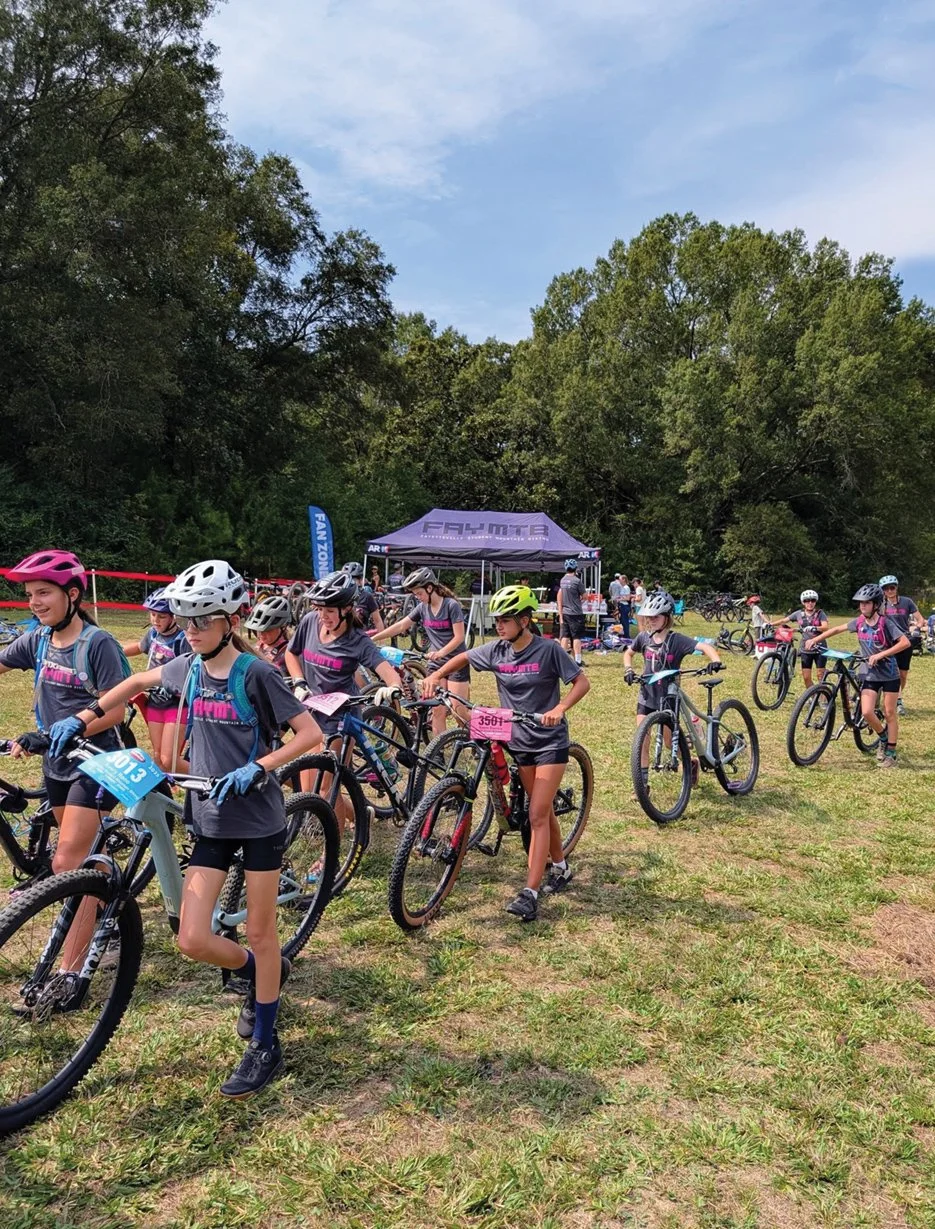
Students from FayMTB get ready for a Girls Riding Together (GRiT) pre-ride. (Photo by Ben Spiking.)
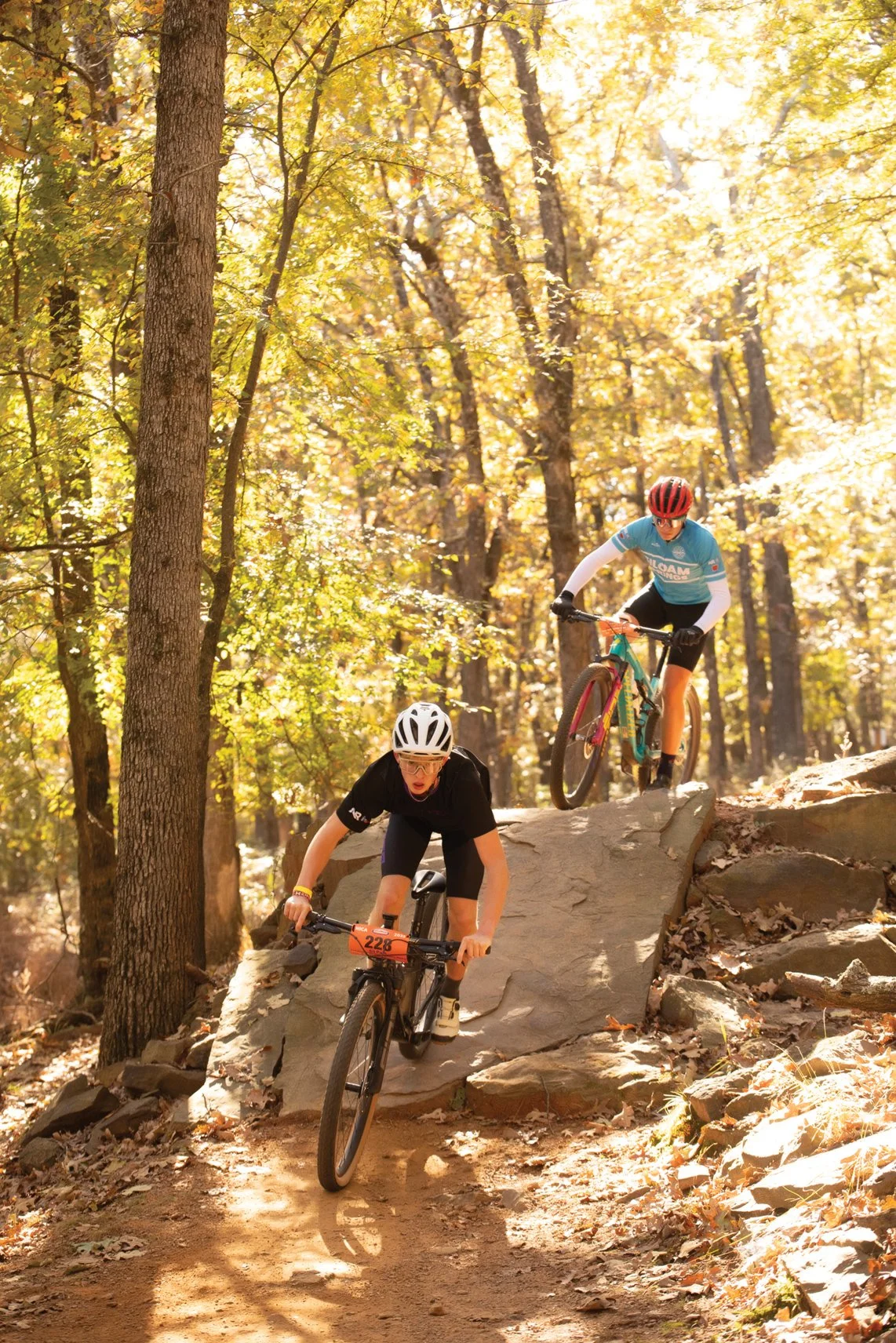
Eli Park tackles a trail at the NICA state championships at Centennial Mountain. (Photo by Jodi Holifield.)
Sixth grader Audrey Denham hadn’t planned to race when she joined last season. She finally signed up for the last race of the year, which happened to be the state championship at Centennial Mountain.
“I was so scared,” said Audrey, who attends John L. Colbert Middle School. “I was like, Oh gosh, what did I get myself into? But then, like halfway through the race, I realized ‘oh, this is fun.’ Then I looked around and thought, ‘this is pretty.’”
Her friend Avery Reno was also nervous when she first joined with her triplet sisters, Elle and Ireland. “I thought it was going to be this whole really, really competitive team,” Avery said. “But it was just a big old friendly environment for all skill levels and all ages.”
That atmosphere is by design. Inclusivity is one of NICA’s core values, along with fun, equity, respect and community.
“On the outside, it’s youth cycling,” said Arkansas league director Terry Coddington. “But we’re really youth development on two wheels.”
That development starts with access. Scholarships and loaner bikes help make the sport possible for riders who might not otherwise try it.
Access continues through community. Fayetteville High School sophomore Eli Park expected racing to feel serious and cutthroat. “I thought it’d be a lot more competitive and focused and serious,” he said. “But the communication and camaraderie on the course were surprising.” In one race, he and a rider from another team took turns drafting off each other’s back wheels before a sprint to the finish — a cooperative move that makes sense in cycling but is rare in school sports.
That camaraderie stretches across teams. Kids in different jerseys cheer for one another, swap tips and often keep in touch. “It’s a community you never know existed 'til you’re a part of it,” said FayMTB rider Makaela Rogers.
Makaela’s dad, coach Adam Rogers, helped grow FayMTB into one of the biggest NICA teams in the state. “People ask how we grew the team,” he said. “It’s simple — we got the parents involved.”
Parents don’t just watch from the sidelines; many become certified NICA coaches who ride with the kids at practices.
Coddington calls this the NICA effect: “When you get a kid on a bicycle, you often get a family on a bicycle. When you get enough families riding bicycles in communities, then a community starts to change.”
The ripple continues. Former FayMTB riders branched off to start a Farmington team last season. All it takes to form a team is a couple of kids and adults — extensive trail network not required. “We have a three-mile trail in Conway now because the NICA kids built it,” Coddington said. “Now there are hundreds of kids running cross country on a trail built by their peers.”
The benefits go beyond the trails. “We teach the kids mountain bike skills for six weeks,” said Oklahoma league director Dave Weaver. “Once a race starts, that kid has to make 982 decisions — how to start, how to pace themselves, when to drink, how to do the turns.” That means judgment, risk management and quick thinking.
“There are businesses who’ve hired some of the NICA kids who tell us they think differently when they come to work,” Weaver said. “They have a different work ethic and decision-making abilities.”
NICA teams in
Ozarks Electric’s territory:
+ Haas Hall Academy
+ Madison County Cyclists
+ Springdale Trailblazers
+ Farmington Composite
+ Fayetteville Composite
+ Tahlequah Composite (Okla.)
For more information, visit arkansasmtb.org and oklahomamtb.org.
The FayMTB team will have “try it out” events for interested students to take a ride around Lake Fayetteville and meet coaches and riders.
No bike? No problem. Loaner bikes will be available. Look for the purple and black FayMTB tent next to the Botanical Garden of the Ozarks, 4703 N. Crossover Road.
April 25, 12 – 3 p.m.
May 23, 12 – 3 p.m.
Confirm details by visiting faymtb.org
What a NICA Race Weekend Feels Like
More campout than competition, more community than crowd
By Amy Merck, Editor
A NICA race looks less like a traditional sporting event and more like a traveling outdoor community.
Saturdays are for set-up and pre-rides. Upbeat music fills the air as teams claim their space. They set up tents and tables, bike stands and grills. Bikes soon fill the metal racks and lie in loose rows across the grass. This pit zone becomes the weekend’s home base — where families gather and riders check in, collect race plates and confirm call-up times. It’s part headquarters, part repair station and part cheering section.
Before anyone races, students head out for scheduled pre-rides. They learn the turns, climbs and technical sections ahead of time, often riding the course multiple times with coaches and teammates so they aren’t seeing it for the first time at speed. For many families, that practice time is reassuring. The race isn’t blind. Riders know what to expect.
And parents aren’t just watching from camp chairs.
Every NICA race relies on volunteers. They direct parking, work registration tables and serve as course marshals along the trail. They stand at road crossings, help manage staging areas and ride sweep behind the final racers to ensure no one is left behind. Others assist with timing and first aid stations.
Sundays are for racing.
Races unfold throughout the day, grouped by grade and division. Start positions are determined by time trial results or previous performance, and riders launch together in mass starts. The singletrack course is typically around three miles long. Older and faster divisions complete multiple laps.
By mid-afternoon, teams gather in the grass around a makeshift podium for awards. Each division recognizes first through fifth place, giving plenty of riders a moment in the spotlight.
It’s competition, certainly — but it’s just as much community.
2026 Arkansas NICA Mountain Bike Race Series
Aug. 22-23: Time Trial and Race Clinics, Conway
Sept. 5-6: Siloam Springs
Sept. 19-20: Mid-Season Classic, Conway
Oct. 3-4: Bentonville
Oct. 31-Nov. 1: State Championship, Fayetteville
Nov. 7-8: NICA Central Regional Championship, Fayetteville (high school race for 12 NICA leagues in the Central Region: Arkansas, Illinois, Indiana, Kansas, Kentucky, Mississippi, Missouri, Nebraska, Oklahoma, Tennessee, Texas, Wisconsin)


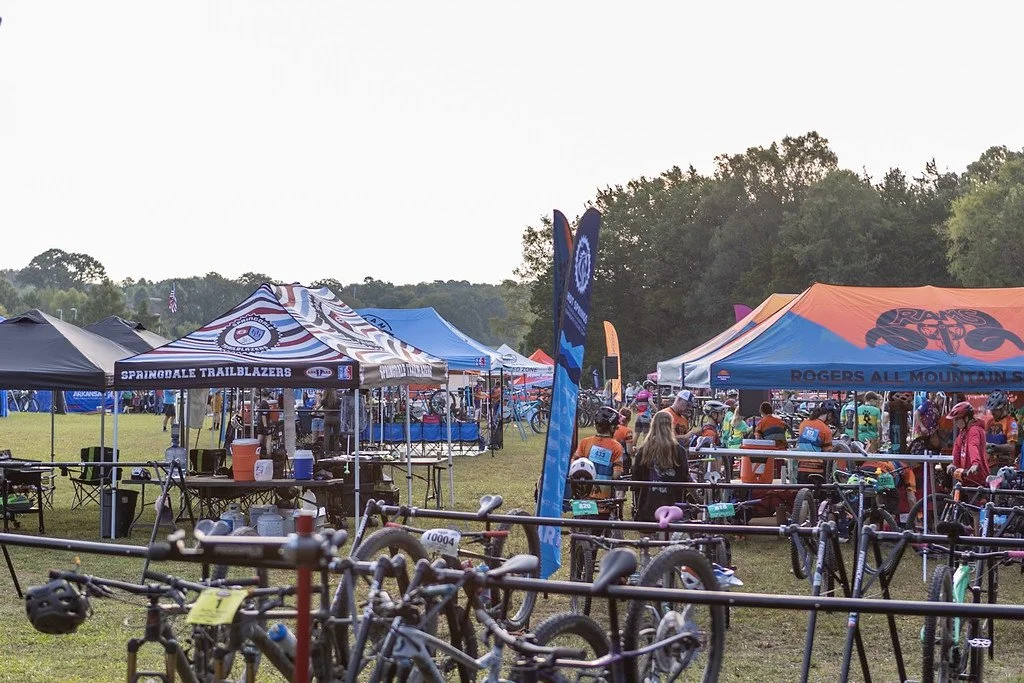

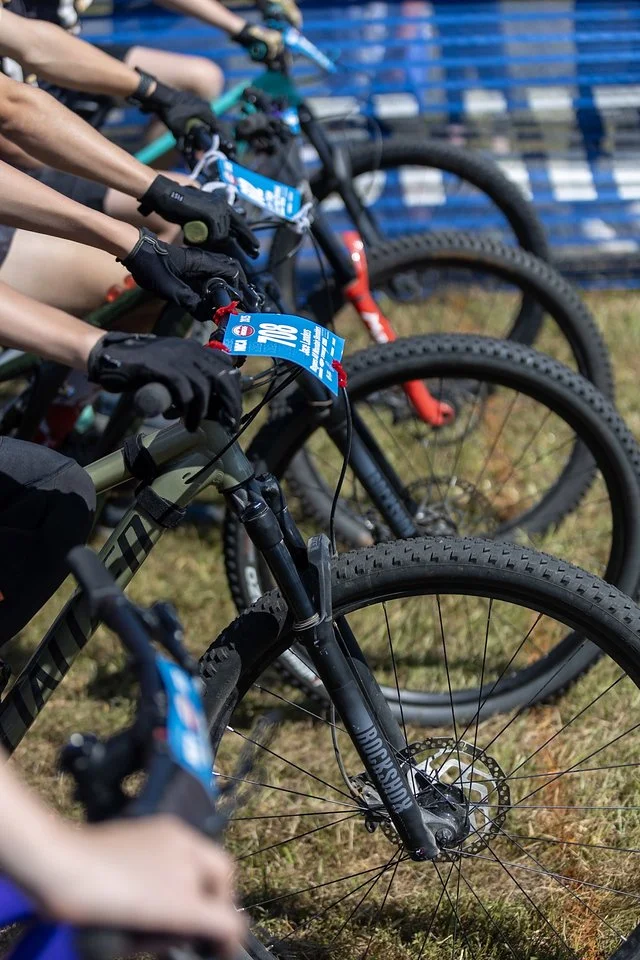
(Photos by Clay Gambill.)
More Than a Ride
Why parents step up as NICA coaches
By Amy Merck, Editor
For many families, joining NICA starts with a kid who wants to ride.
For some parents, it becomes something more.
Bret Park didn’t plan to become a coach. That first year, he stayed in the background.
“I wanted to stay pretty much off the bike and let it be Eli’s thing,” Bret said of his son, who’s a sophomore at Fayetteville High School. “I didn’t want him to feel like, ‘Oh, Dad’s doing this now.’”
But as he watched his son grow — and as he saw the culture of the team up close — something shifted.
“When he found his own success and his own joy with it, I saw how much fun everyone was having and thought, well, I could contribute a little bit. I can figure out some way that I could be part of this, too.”
Park completed NICA’s certification process and earned his Level 2 credential. That includes background screening, SafeSport training, concussion awareness, youth development education, and CPR and First Aid certification. Level 2 coaches also complete on-the-bike skills training and log supervised coaching hours before leading rides.
“This isn’t just anybody with a bike showing up,” Park said. “You’re really learning something.”
He began “sweeping” the youngest group of riders — fifth and sixth graders — riding at the back to make sure no one was left behind.
“I was amazed at how much I felt like I could connect with those kids and influence their riding and build their confidence just by riding with them,” he said. “That’s been really rewarding. A lot of fun.”
NICA’s tiered certification system means every coach on the trail has completed safety training and background checks before working with student-athletes. Higher-level coaches complete additional field hours and leadership training.
The FayMTB team practices twice a week at Mount Kessler and Centennial Mountain in Fayetteville from July to October. Riders work on technical skills such as braking and cornering before heading out on group trail rides based on ability level. Two certified coaches accompany each group of eight riders, ensuring close supervision and support.
Now that he’s a coach, Park sees firsthand what keeps kids coming back. He’s watched timid riders grow bolder, friendships form across schools and setbacks turn into lessons on resilience.
For him, the value goes beyond race results.
“All of the coaches are supportive and encouraging. They’re riding for the love and joy of it,” he said. “That’s the kind of thing you want your kid to pick up and carry forever.”
And for parents watching from the trailhead, that may be the biggest reassurance of all: their children aren’t just being supervised.
They’re being guided.

Josh Borgstadt, left, and Bret Park take part in the NICA coach training clinic in May 2025 at Centennial Mountain in Fayetteville. (Photo by Clay Gambill.)
An Invitation to Ride
GRiT is helping more girls see they belong on the trail
By Amy Merck, Editor
There’s a difference between being allowed to join — and being invited.
One says, “You can sign up if you want.”
The other says, “I want you to come ride with me.”
For one organization working to get more girls on bikes, that difference is everything.
The National Interscholastic Cycling Association (NICA) addresses that gap through its Girls Riding Together initiative, known as GRiT, designed to intentionally recruit and retain girls in a sport that has historically skewed male.
The effort is showing results. About 26 percent of Arkansas NICA riders are female, slightly higher than the national average of 24 percent. The Fayetteville team, FayMTB, is higher still at 30 percent. Before GRiT launched, female participation hovered between 12 and 18 percent, according to Anya DerGazarian, director of programming and fundraising for Arkansas NICA.
“Going into a community and saying, ‘Hey, why don’t you come try this?’ with a one-on-one invitation is when girls go, ‘Okay. I’ll come,’” DerGazarian said.
That timing matters. Research from the Women’s Sports Foundation shows girls drop out of sports at roughly twice the rate of boys during early adolescence.
“Almost all girls love to ride bikes when they’re little, just like boys do,” said Shana Rogers, a coach for FayMTB and the team’s GRiT coordinator. “At some point, they’re either told girls don’t do that, or they just don’t stay with it. But if you can catch them at the right age, you can show them it’s perfectly fine for girls to ride bikes. You don’t have to stop. You can do everything else you want. You can have fancy nails, eyelashes. You can be a girly girl and still ride a bike.”
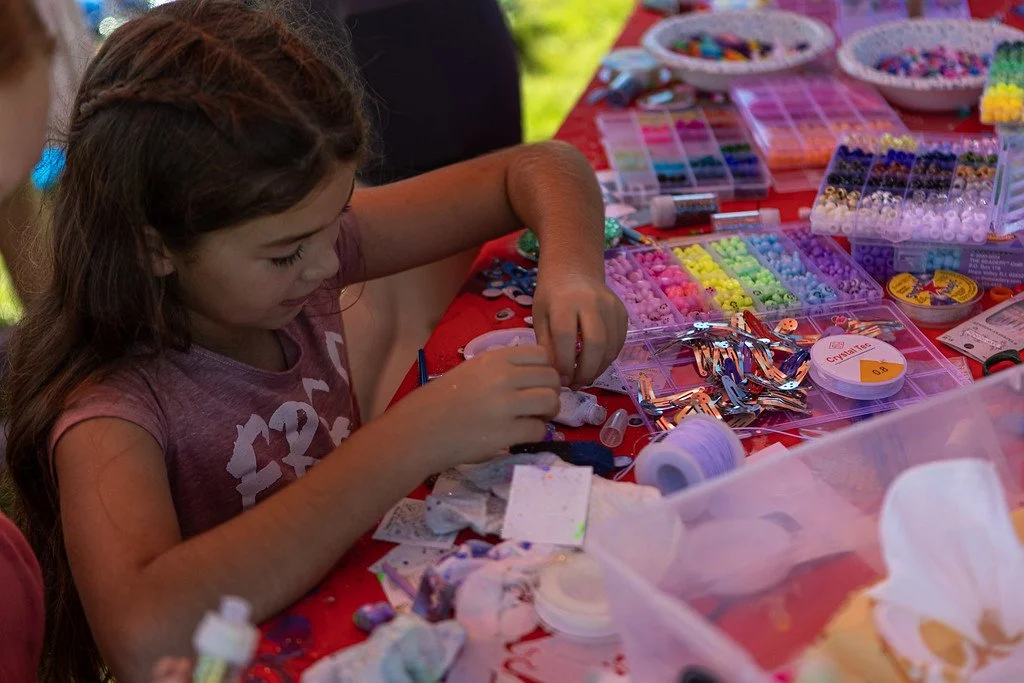
GRiT activities include girls-only social rides and preseason recruitment events. On race weekends, GRiT hosts a dedicated pre-ride before the regular course preview, giving girls a chance to learn the trail with a coach before race-day intensity begins. A GRiT Hype Zone offers space to connect, create and cheer.
For Makaela Rogers, Shana’s daughter and a sophomore at Fayetteville High School, having more girls on the team makes a difference.
“In a male-dominated sport, it’s hard to relate when it’s all boys,” she said. “When you have female friends and teammates, you can talk about more things, and it makes it more fun to ride.”
She values the support as much as the competition.
“When you finish a race, your friends come check on you,” she said. “They ask what hurt, what went well. They’re there for you.”
DerGazarian sees that camaraderie often, especially among middle school riders.
“They’re very concerned about their friends,” she said.
FayMTB also has several women coaches — something Makaela says matters.
“Women coaches understand teenage girls more — mentally and physically,” she said. “If you’re having a bad day, a woman coach understands and is willing to give grace or stay behind the pack with you.”
League leaders say that kind of support keeps girls riding past the age when many step away.
Because the goal isn’t simply participation.
It’s belonging.
And sometimes belonging starts with a simple invitation: “I want you to come ride with me.”