
Steady for the Storm
Habits and judgment shaped long before the work turns urgent
By Amy Merck, Editor
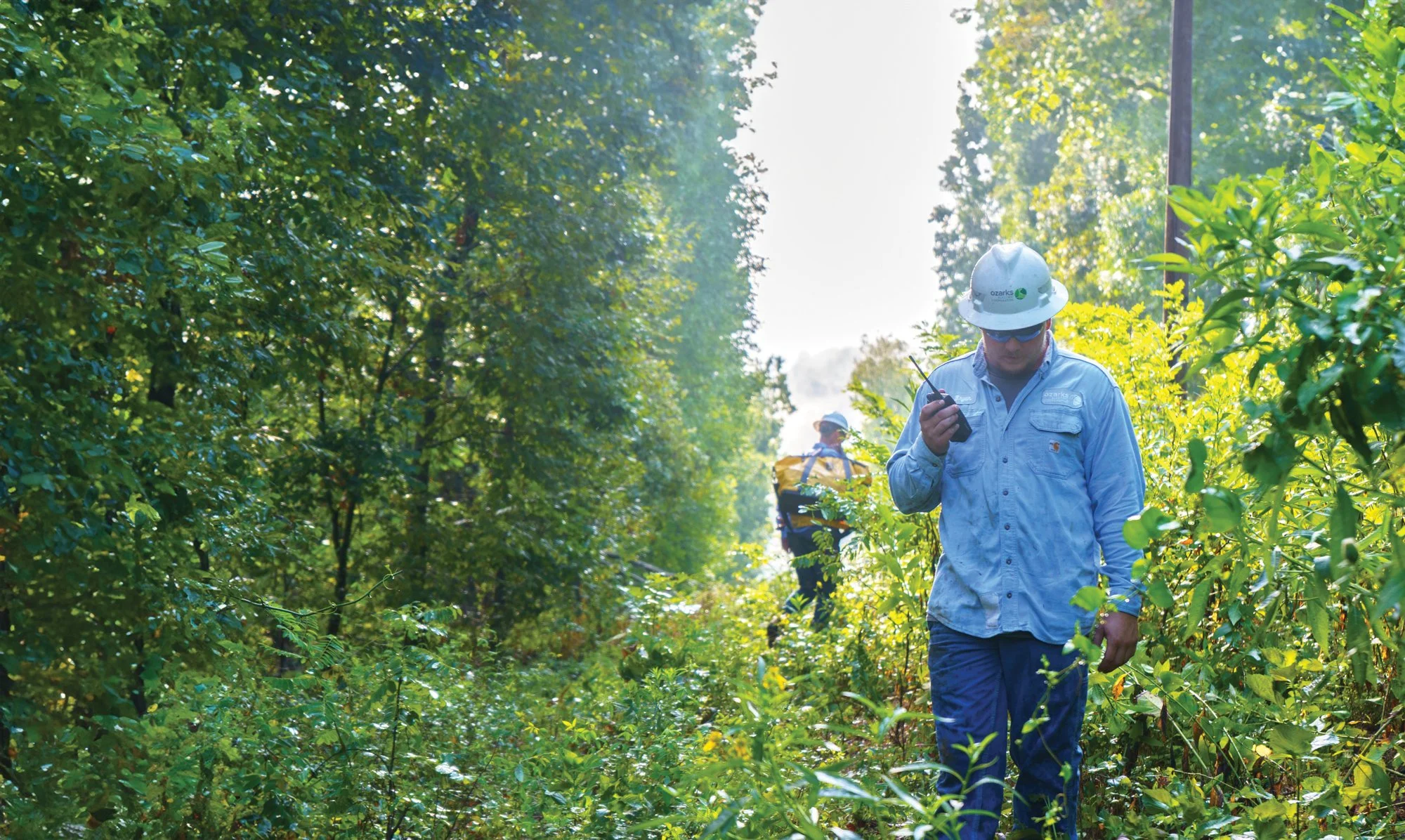
Bryar Burks communicates with another lineman during storm restoration in a remote area. (Photos by Alex Boyd.)
It was late afternoon when Pace Maddox, a senior line technician, wrapped up his workday. He was headed home to his wife and new baby. Then the radar shifted. A storm was rolling in.
That night, he would swap one sleeplessness for another — restoring power instead of being up with his newborn.
When you’re a lineman, you get used to missing nights like these — birthdays, holidays, the first months with a new baby. You go when you’re called, and you stay until the job is done.
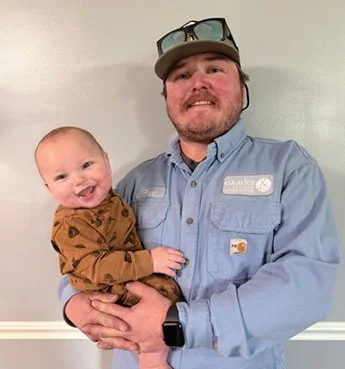
“There’s times we’ve gone home and had no power ourselves, Then you’re back the next morning working on somebody else’s power, knowing yours is still out.”
Pace Maddox, senior line technician, whose son, Thomas Hayes, who was born during the busy 2025 storm season.
For Maddox and the Ozarks Electric Cooperative crew working that night in June 2025 in Adair County, Okla., the pattern was familiar. They watched the radar, waited for the winds to pass, then headed out to assess the damage — cutting through downed trees, navigating blocked roads, and figuring out how to safely make repairs.
Storm restoration follows a rhythm. But no two storms are the same. Each brings different hazards and decisions, and each demands preparation and a methodical approach.
“You normally know it’s going to be bad before you even leave,” Maddox said. “If you can prepare for it, you do. You shower. You eat. You get your clothes ready. You don’t wait, because you may not get the chance.”
More than storm work
Storm work may be the most visible part of a lineman’s job, but it’s only one piece of it. On a typical day, Ozarks Electric linemen are replacing poles, running new line as the service area grows, trimming rights-of-way, and responding to everyday emergencies — like poles broken by car accidents or lines pulled down by dump trucks.
Much of that work happens far from the road. Reaching damaged equipment might mean walking in on foot or using ATVs to navigate steep terrain where trucks can’t go.
“You’re always thinking a few steps ahead,” said senior line technician Tristian Rector. “What’s energized. What’s not. And what has to happen before you can even touch the line.”
Before power can be restored, multiple steps must happen first — isolating circuits, grounding lines, clearing hazards, setting poles, stringing wire, and testing equipment.
Method over muscle
The job is physically demanding, but linemen say it’s less about strength and more about thinking through problems safely.
Each shift starts with a briefing, where the crew chief lays out the plan and each person’s role. But plans change.
“Pretty much anything can change your whole day,” Rector said. “You hit a water line. A rock. Something breaks on the truck. You get called off to a broken pole somewhere else.”
When that happens, crews stop, regroup, and communicate.
“You talk about it on the ground,” he said. “You get up there and see something else that’s wrong. So you back up, rethink it and then go again.”
From the roadside, a pole replacement might look simple. In reality, it can take hours.
“People see it and think, ‘You’re just hooking two lines together,’” Maddox said. “They don’t see the ten or eleven things that have to happen before that.”
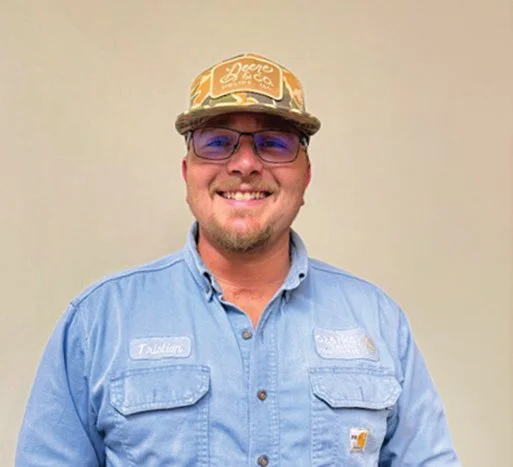
“You’re always thinking a few steps ahead.”
Tristian Rector, senior line technician
Long hours, shared responsibility
During major outages, 16-hour days aren’t unusual. Crews leave the field when needed to eat and rest.
“There’s times we’ve gone home and had no power ourselves,” Maddox said. “Then you’re back the next morning working on somebody else’s power, knowing yours is still out.”
Restoration follows clear priorities. Crews start with the largest lines first to restore power to the most people — hospitals, schools, neighborhoods — and then work down the system until each meter is restored.
Sometimes the work takes linemen far from home. When disasters strike elsewhere, Ozarks Electric crews are dispatched to help neighboring cooperatives restore power — one of the seven cooperative principles, Cooperation Among Cooperatives.
“I’ve seen a big guy, maybe 6’7”, probably 350 pounds, break down crying when we showed up,” Rector recalled of a response in Louisiana. “They’d been without power for weeks. That’s just what we do. We show up, fix it and move to the next one.”
For many linemen, that mix of challenge and responsibility is part of the draw.
“There’s always something different,” said apprentice lineman Foster Layman. “You might be climbing one day, changing a pole the next and then working with wire. It’s never the same.”
Senior lineman Wyatt Simco agreed. “You can go somewhere you’ve been a hundred times and still get surprised,” he said. “It keeps you on your toes.”
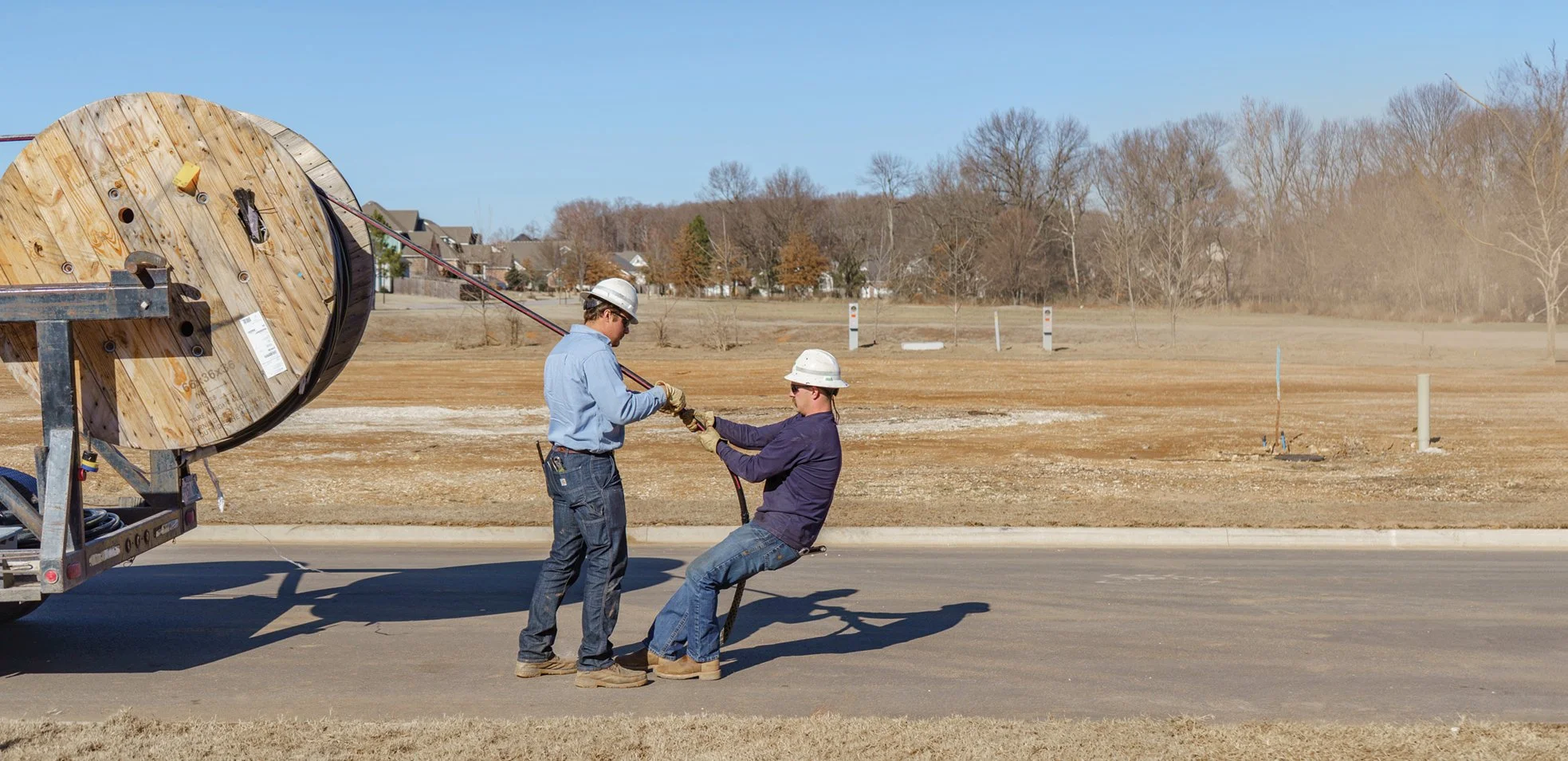
Brock Oktay and Foster Layman work on installing underground electric lines at a subdivision in west Fayetteville. (Photo by Alex Boyd.)
Always learning
No two jobs are ever exactly alike, and linemen don’t work alone.
“You depend on each other,” said level-one apprentice Brock Oktay. “You can’t do this job by yourself. Somebody’s always watching out for you, and you’re watching out for them.”
Journeymen teach apprentices on the job — how to frame a pole, read a system and slow down before acting. It’s hands-on learning built on trust and shared responsibility.
“Everything about this job is hard at the start,” Maddox said. “It’s a lot to learn, and it takes all four years [of apprenticeship], if not longer.”
Cooperatives and other electric utilities recognize Lineman Appreciation Day in April, but inside the crews, appreciation looks different. It’s the daily teaching, the shared decision-making and the quiet understanding that someone else’s safety depends on your focus. Because when the lights go out, the work is just beginning.
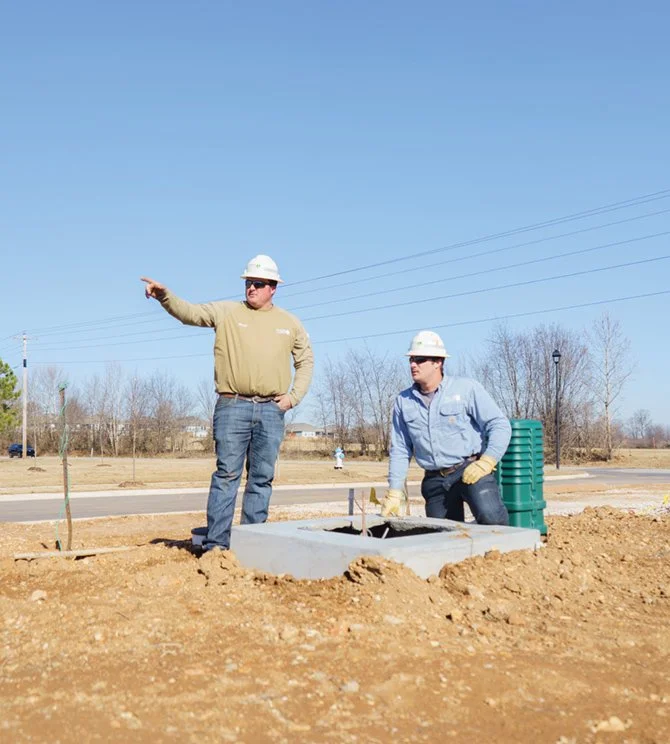
Wyatt Simco and Brock Oktay work on new underground wires in west Fayetteville. (Photo by Alex Boyd.)